Have you ever set off on a run feeling perfectly fine, only for a dull ache to creep into your lower back somewhere around the 3km mark? You're not alone. It's one of the most common complaints I hear from runners, and it tends to follow the same pattern every time: the first 10 or 15 minutes feel good, then something quietly shifts, and by the time you're heading home you're either pushing through it or cutting the run short.
The frustrating part is that it doesn't feel like an injury. There's no twisted ankle, no sudden pull, no obvious moment where something went wrong. It just builds. And because it builds, most people assume it must be a back problem; something to do with the spine itself.
In most cases, it isn't.
The real culprit isn't your back
Your spine has a job during running, and it's mostly about staying still. Not rigid, but stable. While your legs are doing the obvious work of pushing you forward, a quieter group of muscles is working continuously to keep your pelvis level and your spine in a neutral position. These are the stabilisers:
- Your gluteus medius (the muscle on the side of your hip)
- Your deep core muscles
- The small muscles that run alongside your spine
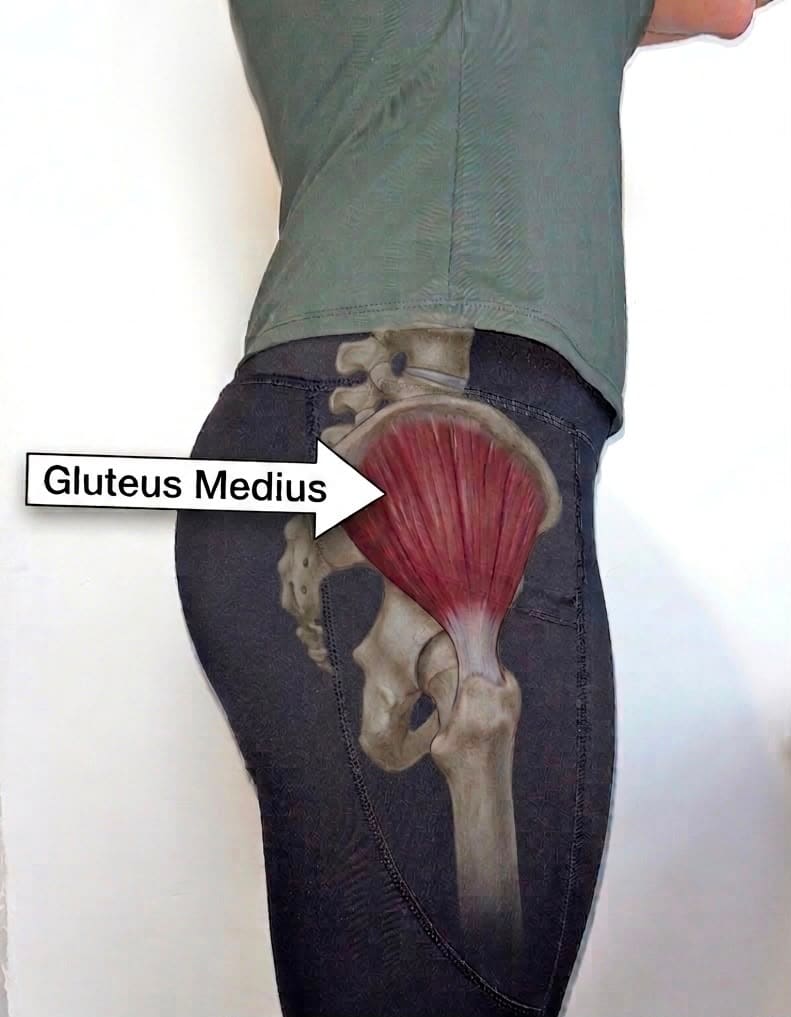
The big muscles like your glute max, quads, and hamstrings — your prime movers — work in rhythm. They contract, they relax, they get a brief rest with every stride. The stabilisers don't get that luxury. They're switched on the entire time you're upright, holding everything in place.
And here's the catch: stabilisers fatigue faster than prime movers, because they never get to rest.
A 2009 study published in the Journal of Athletic Training tracked what happens to runners' bodies when the small muscles alongside the lumbar spine (the paraspinals) were deliberately fatigued. The results were clear. Once those muscles tired out, runners' bodies shifted into a more forward-flexed trunk, lost their natural lower-back curve, and started bending more from side to side with each step. In other words, the moment the stabilisers tapped out, the whole running posture changed — and not in a good way.
So what's happening at 3km?
Roughly the 3km mark (and it's different for everyone, somewhere between 15 and 25 minutes for most recreational runners) is when this crossover tends to happen. The stabilisers reach their fatigue threshold. They can't hold the pelvis level any longer. They can't keep the spine neutral.
When that happens, your body doesn't just stop. It compensates. The job must get done somehow, so other muscles step in to cover. The problem is that the muscles taking over the work — usually the quadratus lumborum (a deep muscle on the side of your lower back) and the bigger spinal erectors — aren't designed for continuous stabilising work. They're built for occasional, powerful contractions.
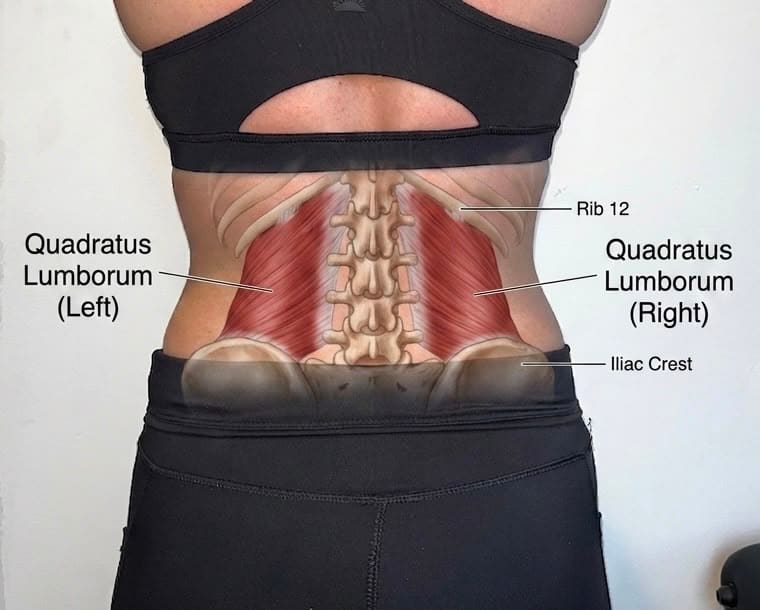
So, they overwork. They cramp up. They start to ache.
That ache is the pain you feel at 3km.
A 2019 systematic review in BMC Musculoskeletal Disorders pulled together the research on gluteus medius function and lower back pain, and the picture it painted was consistent. When the gluteus medius is weak or fatigued, the pelvis drops slightly on the unsupported side every time you take a step. That tiny drop, repeated thousands of times over a run, creates a shearing force across the lumbar vertebrae. Small forces. Lots of repetitions. Eventually, things start to complain.
Who this happens to most
It's not just newer runners. I see it in people who've been running for years, often more than in beginners. Here's why: experienced runners have well-developed prime movers. Their legs are strong, their cardio is solid, and they can keep going for an hour without breathing hard. But running fitness and stabiliser strength are two different things. You can run three times a week for a decade and still have weak hip stabilisers, because running itself doesn't really train them in the way they need to be trained.
The good news is that the fix isn't complicated, and it doesn't take much time.
Three things that actually help
1. Strengthen your gluteus medius
This is the single highest yield change you can make. The gluteus medius sits on the outer surface of your hip, and its main job during running is to stop your pelvis from dropping on the opposite side every time your foot lands. When it's strong, your pelvis stays level, your lower back doesn't have to compensate, and the small shear forces that cause the 3km ache simply don't build up the same way.
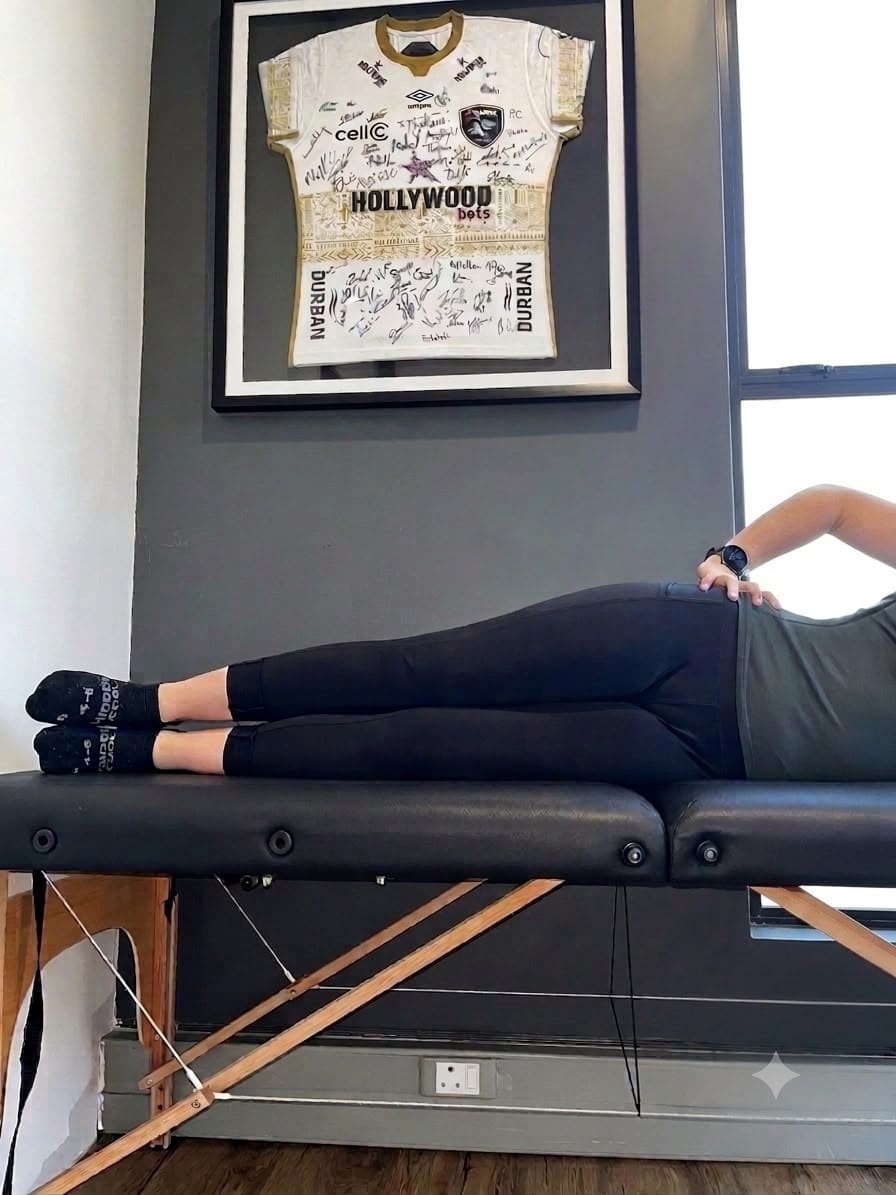
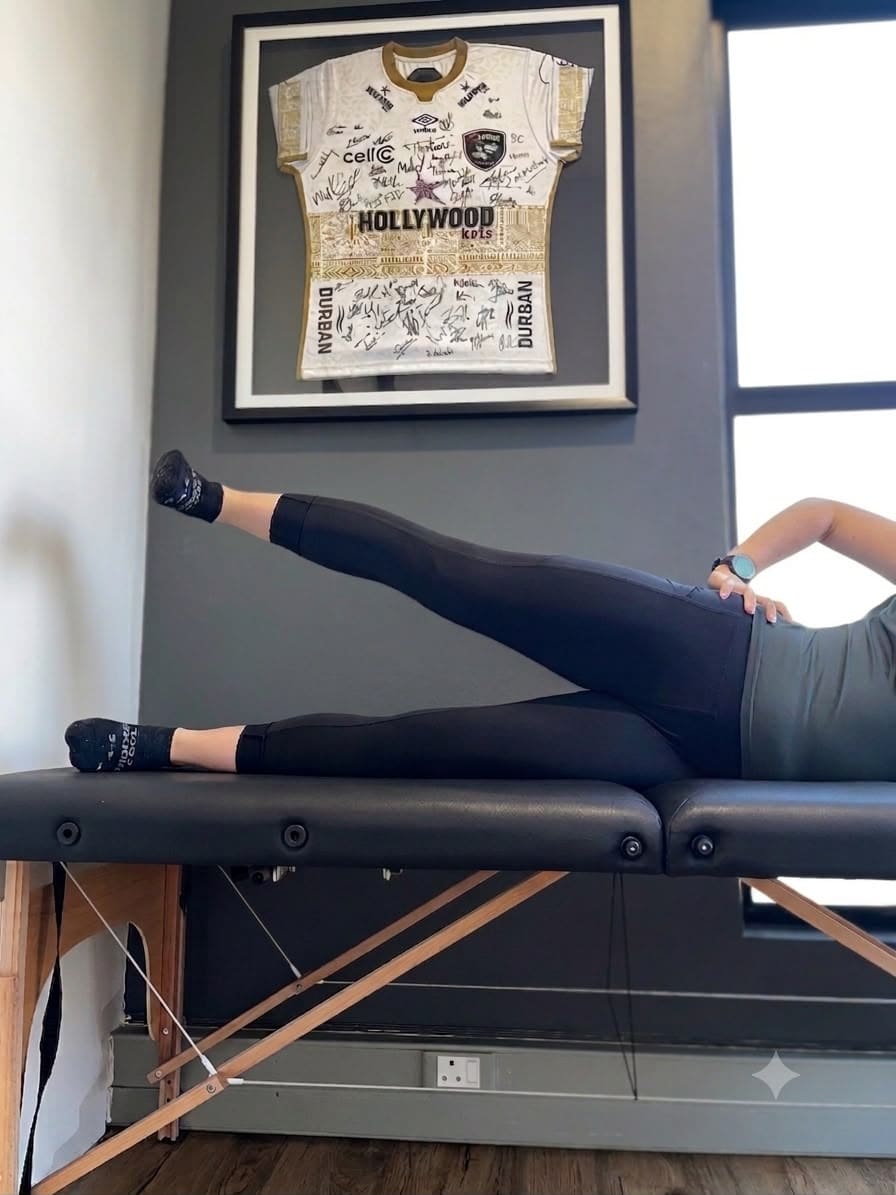
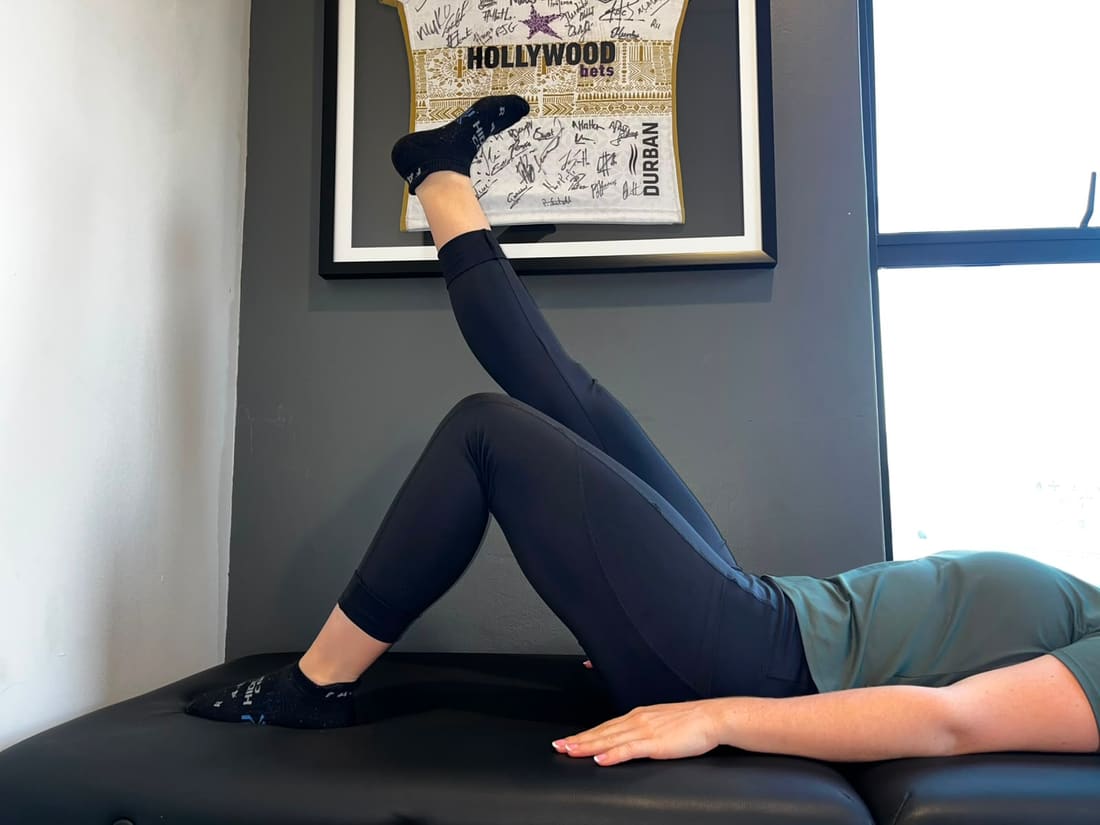
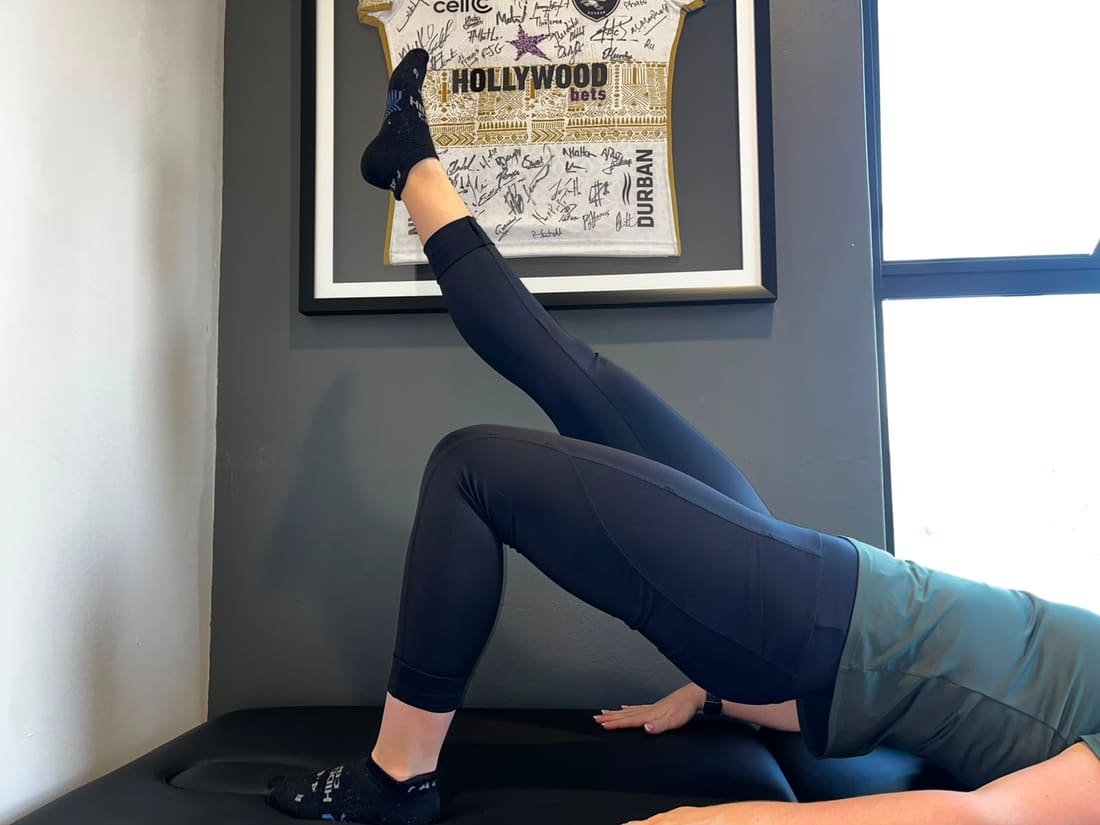
A few exercises that work, in order from easiest to hardest:
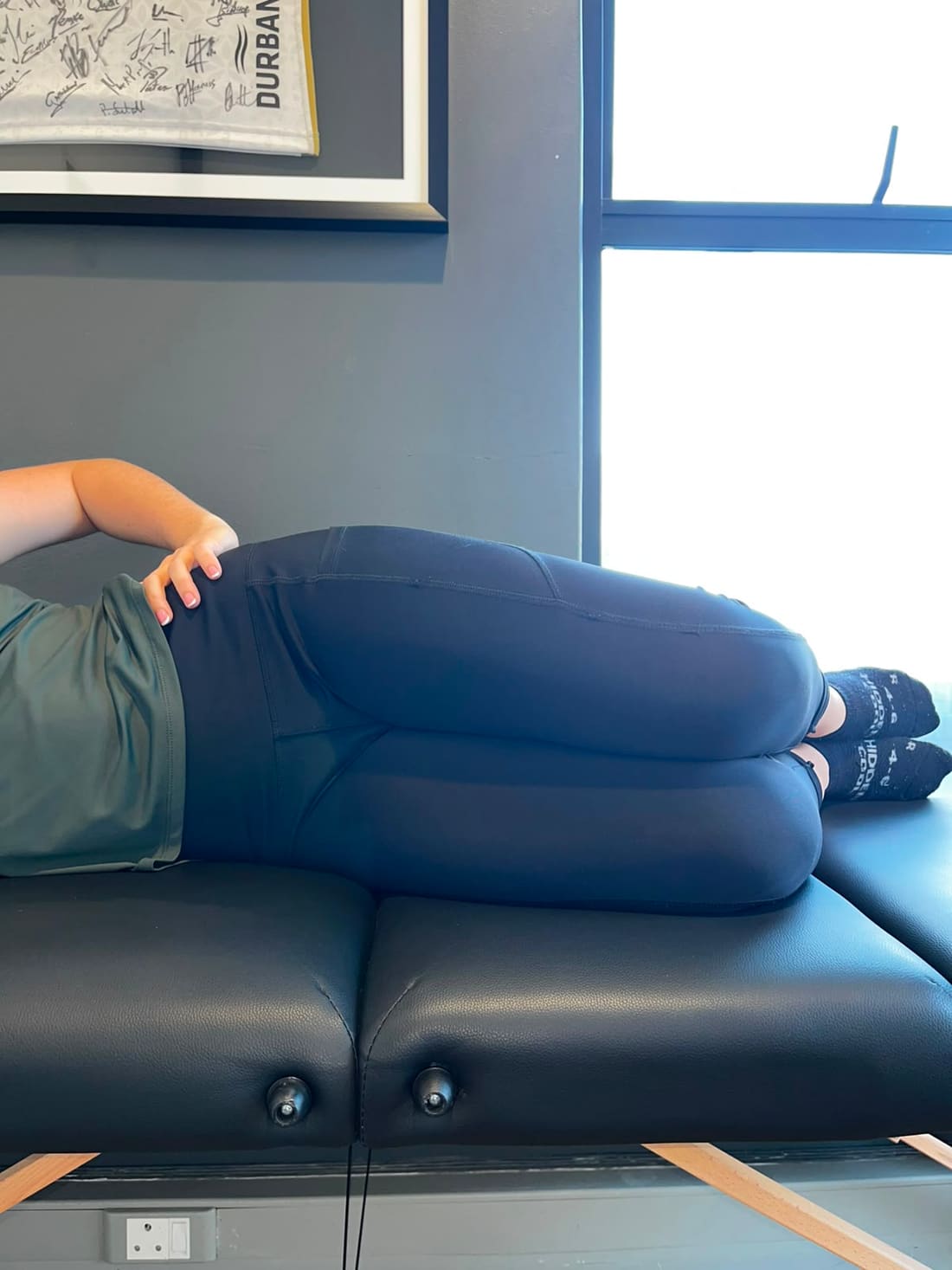
Lie on your side, knees bent, heels together. Lift the top knee while keeping your feet touching. Aim for 12-15 controlled reps per side.
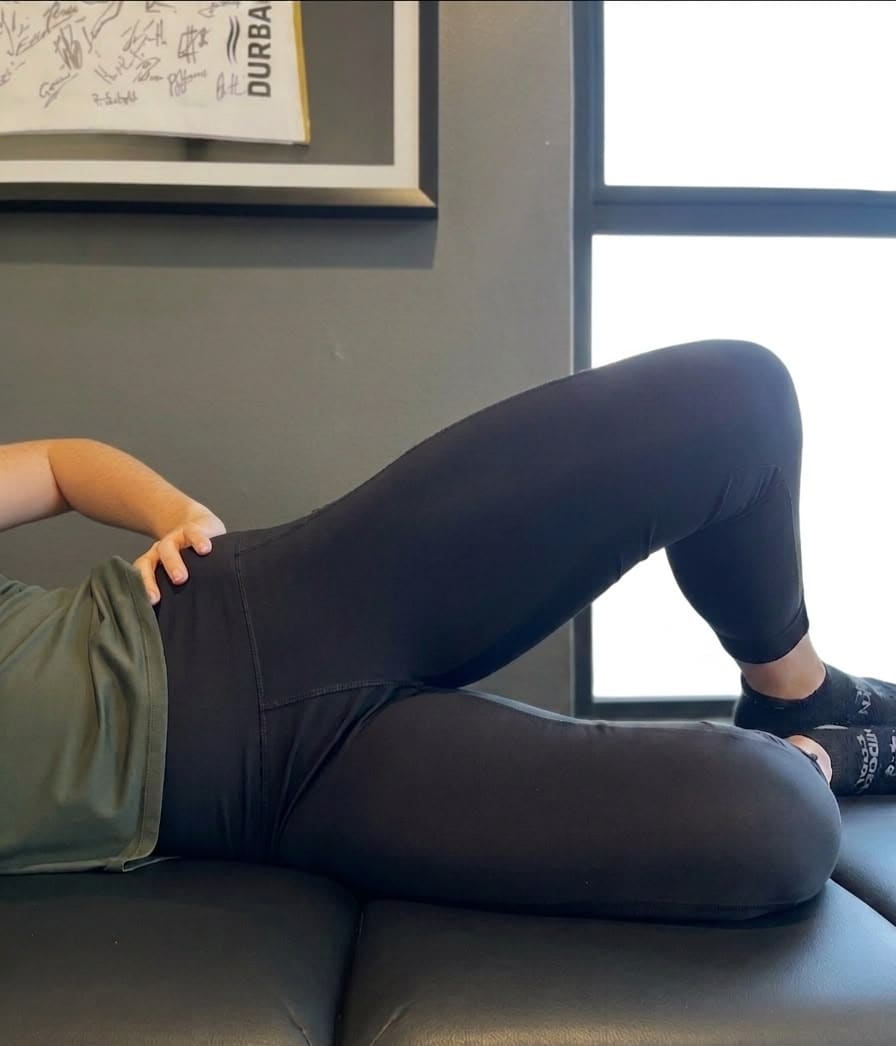
Same starting position, but lift the whole top leg straight up, keeping it in line with your body. 10-12 reps per side.
On your back, one foot on the floor, the other leg straight out. Drive through the heel of the planted foot and lift your hips. 8-10 reps per side.
Two or three sessions a week is enough. You don't need to dedicate a whole workout to it; five minutes after a run will do the job.
2. Train your core for stability, not flexion
Most people think "core" and think sit-ups or crunches. Those work the muscles that bend your spine. But during running, your spine doesn't need to bend; it needs to resist bending. Big difference.
Train the core in the way it actually functions when you run:
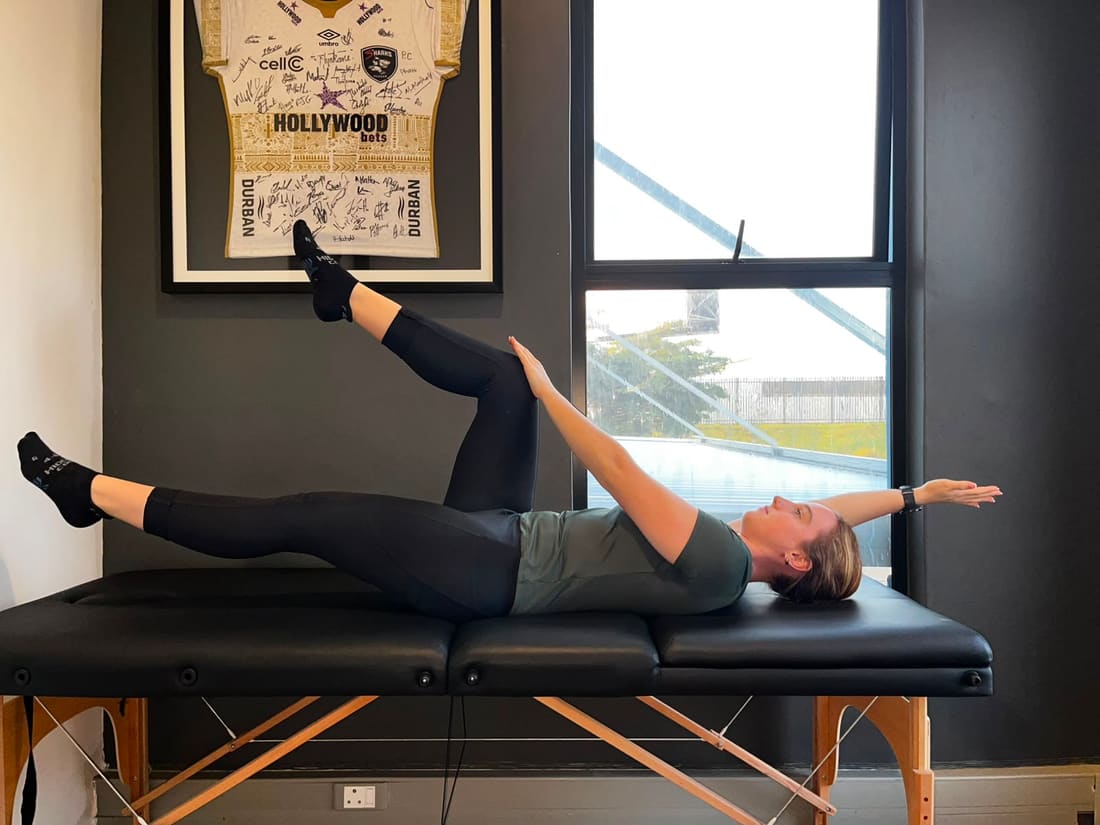
On your back, arms straight up, knees bent at 90 degrees. Slowly lower one arm overhead while extending the opposite leg, then return. The goal is to keep your lower back pressed into the floor the entire time. 8-10 slow reps per side.
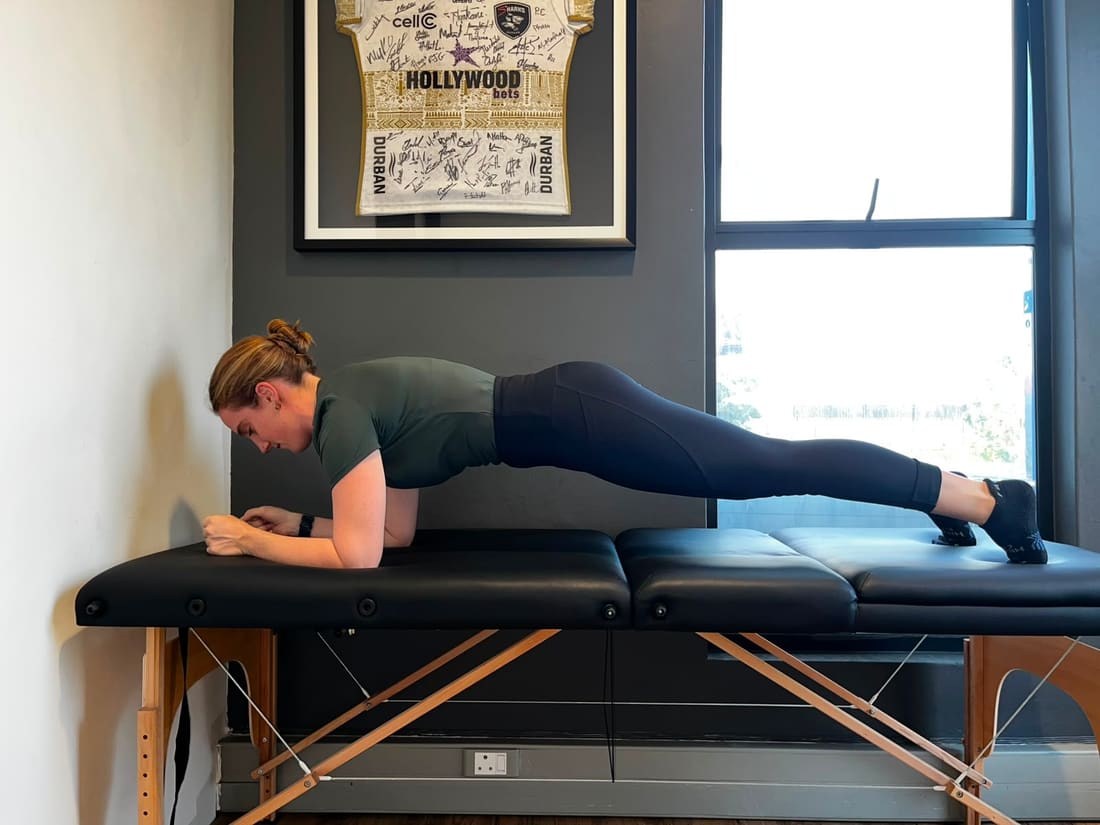
Hold a proper plank position (not sagging, not piked) for 30-45 seconds. Three sets.
If you have access to a resistance band, anchor it at chest height, hold it with both hands in front of your chest, and press it straight out, resisting the pull to one side. 10 reps per side.
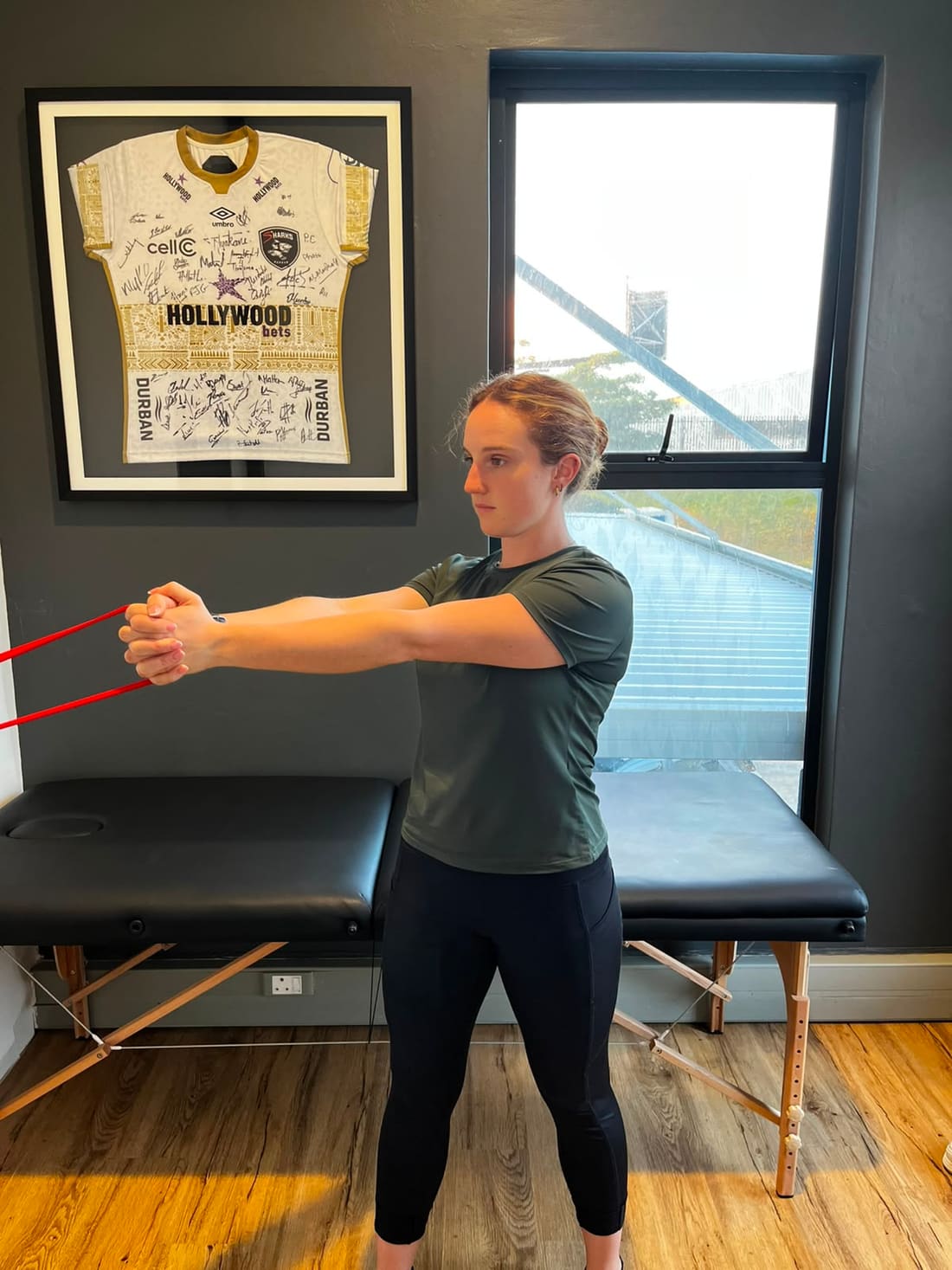
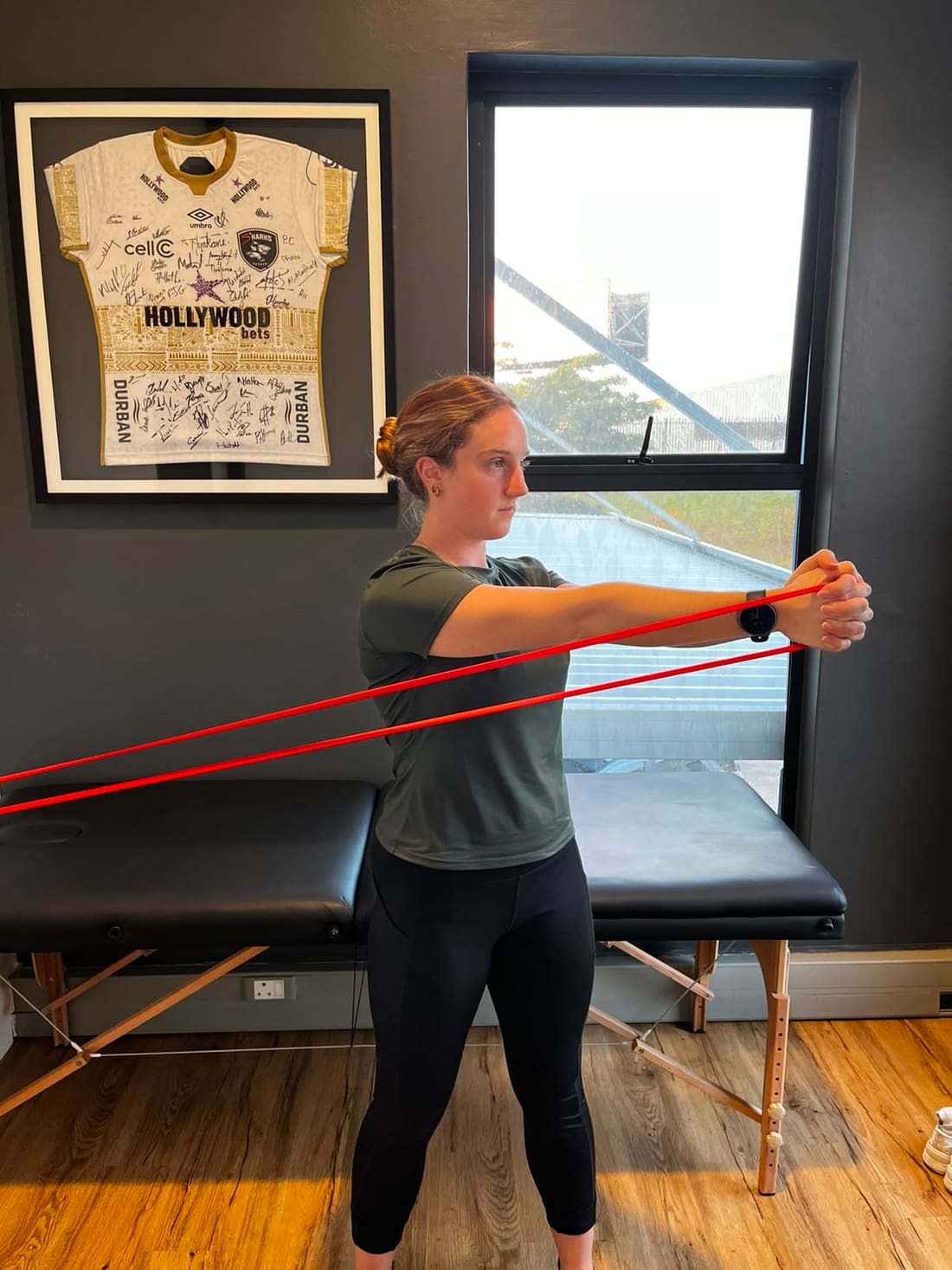
These train the core to do its real job: keeping your trunk stable while your limbs move around it.
3. Adjust your cadence and posture
This one is free, takes no extra time, and starts working immediately.
Most recreational runners take longer, slower strides than they should. This means more time in the air with each step, more vertical movement, and a harder landing — which sends more shock up into the lower back.
A small increase in cadence — taking shorter, quicker steps — reduces all of that. A useful target is around 170 to 180 steps per minute. Most phones have a metronome app; set it to 175 BPM and try to match your steps to the beat for a few minutes. It'll feel strange for the first kilometre, then it'll start to feel normal.
While you're running, hold one simple posture cue in your head: ribs down, eyes ahead. When the stabilisers start to tire, most people respond by either slumping forward or arching their lower back. "Ribs down" stops the arch. "Eyes ahead" keeps your head from dropping, which keeps the rest of your spine honest.
What to expect
Give it three to four weeks. You won't feel a difference after one session. The stabilisers need consistent, repeated work to build up to where they can hold their job for the whole run.
For most people, the change happens gradually. The pain shows up later — maybe at 4km instead of 3km. Then later still. Eventually, on most runs, it doesn't show up at all. You'll have rougher days, particularly when you're tired or under-recovered, but the baseline shifts in your favour.
If you've tried this consistently for a month and the pain hasn't shifted, or if it's sharp rather than achy, or if it's radiating down into your leg, that's the point where you want to get assessed in person. There are other causes of low back pain in runners that need a more specific approach. But for the standard, dull, builds-up-around-the-3km-mark ache that I see most often, the three changes above resolve it in most cases.
The body isn't punishing you. It's telling you that one part of the team is doing more than its fair share. Give that part of the team some help, and the message stops.